|

|
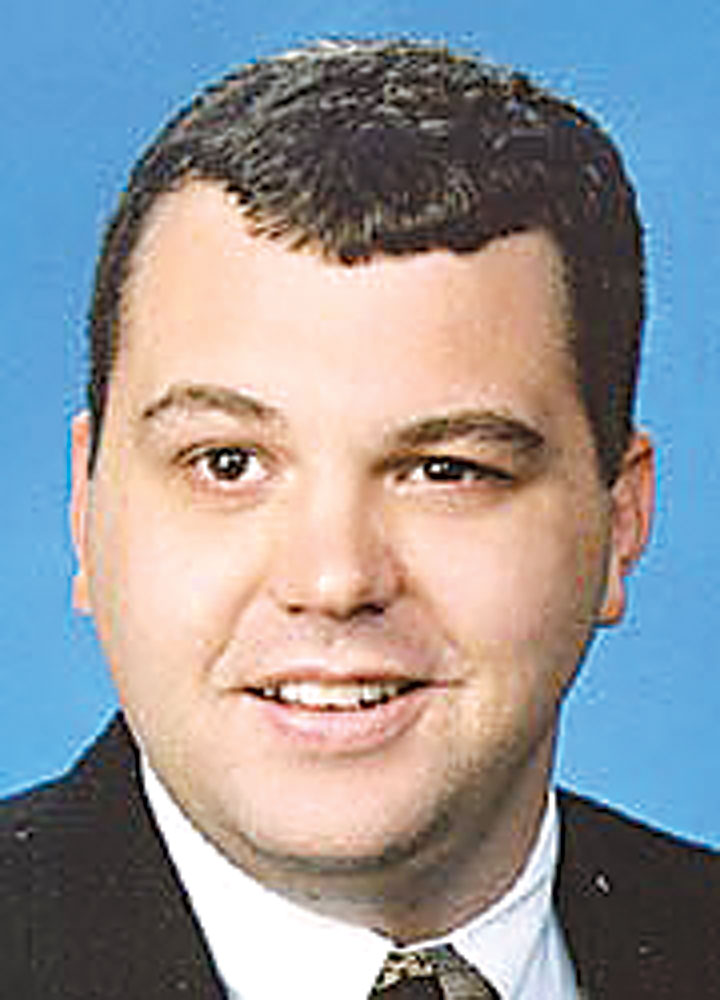
Delegate J.B.
Jennings (R - 7)
Lowe House Office Building, Room 319
6 Bladen St.
Annapolis, MD 21401 - 1991
(410) 841-3698
e-mail: jb.jennings@house.state.md.us
e-mail:
|
|
Illegal
Immigrants Drivers in Maryland
-
by Delegate J.B. Jennings (R - 7) - |
In the early morning hours
of June 22, 2010, a tragic accident occurred on I-83 involving a drunk
driver which resulted in the death of his passenger. This is an
accident which could have been prevented not only by the choices of the
drunk driver, but also by the State of Maryland. Due to a recent law,
Freddy Cortez Flores, an illegal immigrant was driving that night with
a legally issued Maryland driver’s license. The law that allows
illegal immigrants to obtain legal driver’s licenses; it passed by the
General Assembly and signed by the Governor in 2009.
This accident occurred only four years after a similar accident in
Howard County during the 2006 Thanksgiving Holiday. A United
States Marine, at home on leave from serving in Iraq and the driver,
were killed at a traffic light by a drunk driver who was also an
illegal immigrant and had a blood alcohol content which was four times
the legal limit. Much like the recent accident, it is one which
could have been prevented, as the driver was legally driving with a
Maryland driver’s license. Yet, the Maryland General Assembly remained
passive on this issue.
Again, assessing this recent tragic accident and its predecessor, it
raises the question should illegal residents be allowed to obtain
drivers licenses in the State of Maryland? I believe the answer
is absolutely NO. Let me explain my reasons.
In 2009, I, along with several of my other Republican colleagues,
co-sponsored legislation (House Bill 387) that would have required
Maryland to finally comply with the Federal Real ID Act passed in
2005. Unfortunately, the original co-sponsors, including myself,
removed our names from the bill subsequent to the Democratic opponents’
introduction of an amendment that would “grandfather” amnesty for
illegal aliens who already have a Maryland driver’s license. The
passage of the “grandfather” clause is twofold. It provides
amnesty for those unlawfully present to renew their license every five
years without proof of lawful presence (like the drivers involved in
the two accidents I mentioned). Secondly, it creates a two-tier
system of licensing in Maryland that is not only confusing but
continues to cost taxpayers and drives up MVA costs. Because of
this law a growing total of twelve states (12) including Arizona, do
not accept a Maryland driver’s license as an accepted form of
identification.
As I mentioned, the original language of House Bill 387 was actually
aimed at finally ending the debate, and resolving the question
regarding the issuance of driver’s licenses and identification cards to
illegal immigrants. The original legislation was resoundingly supported
by a popular opinion poll which at the time was in agreement with the
position of the original bill. The 2009 poll done by the Shaffer Center
for Public Policy, University of Baltimore, February 2009 stated that
81% of Marylanders favored a single tier system Despite the
overwhelming opinion to not allow illegal immigrants to legally drive,
the majority party had eliminated all language from the bill requiring
the requisite of being a United States citizen and having proof of
documentation with a Social Security Number to be considered eligible
for a Maryland driver’s license.
The need for the Majority Party to enact legislation such as the
two-tier system, is based on a decision by then Attorney General Joseph
Curran who declared in 2003, “that the State cannot deny someone a
license based solely on his or her inability to prove legal residence”
(The Maryland Gazette, December 6, 2006)
A strong influence on the Majority Party’s position is an organization
called Casa de Maryland. This organization is highly influential on
lawmakers, especially their votes on critical pieces of legislation
concerning illegal immigration. Their committed efforts and
strong hold on legislators in Annapolis are for the reason House Bill
387 was drastically modified. Similarly, it is the reason there are
also proposed bills which would exempt illegal immigrants from paying
non-resident tuition at public institutions of higher education in
Maryland. Such bills are continually being introduced each General
Session with the aid of Casa de Maryland. Moreover, Casa de Maryland
continues to push their agenda on Maryland taxpayers by using taxpayer
money to lobby the Majority Party’s approval for further funding in the
State’s annual budget. For example, Casa de Maryland recently
received $200,000 in State funding for Fiscal year 2011. In other
words, our taxpayer money is going to fund an organization that
supports illegal immigrants obtaining legal driver’s licenses, and
influences the policy of the Majority Party concerning issues dealing
with the status of illegal immigrants.
It is my position that Maryland cannot afford to continue to
foster illegal immigrant drivers in our State. The Legislature’s 2009
bill and now law, is a testament to the Majority Party’s lack of will
to take a monumental step forward on public safety and immigration
enforcement under enacted federal law. Instead, the current
policy further substantiates my conclusion that this legislative body’s
intention is to facilitate amnesty, not punishment.
In the 2011 General Session this issue should be re-examined with
consideration of the current consequences of the law. I will
continue to take this issue to heart and I hope that my colleagues in
both parties will agree. Otherwise, I believe political agendas will
undermine the legislation of good public policy, and additional
tragedies will be the result.
|
|
|
| 4/8-Delegate J.B. Jennings
Endorses Ehrlich for Governor |
Today, Marylanders finally
received the answer they have been waiting for as former Governor
Robert Ehrlich Jr. has officially entered the Gubernatorial Race.
Delegate Jennings is emphatically supporting the former Governor in his
endeavor. For the past four years, the State of Maryland has
reveled under the failed policies of Governor O’Malley. Delegate
Jennings is confident that Governor Ehrlich will appeal to numerous
Marylanders who are tired of increased state taxes, government spending
and broken promises.
Under Governor O’Malley’s leadership, Marylanders have watched the
state fall from a one billion dollar surplus under Governor Ehrlich, to
a $2 billion deficit (near $8 billion structural deficit) under
Governor O’Malley. With promises severed, such as rising energy costs
which Governor O’Malley assured would not happen, many are looking to
our former Governor for answers in solving Maryland’s growing problems.
Delegate Jennings is confident that Governor Ehrlich will rectify our
state’s fiscal crisis just as he did in 2002 following the conclusion
of the Glendenning Administration. He can attest this fact because he
has known Governor Ehrlich for more than a decade which has lead to
them to become close friends. Delegate Jennings speaks with such
certainty, because he has witnessed Governor Ehrlich at work when he
got his start in politics when then-Congressman Ehrlich hired him as a
caseworker. It was Delegate Jennings’ experience working with Governor
Ehrlich both on his Congressional staff and on the gubernatorial
campaign in 2002, which inspired Delegate Jennings to launch himself
into the political ring.
Delegate Jennings and Governor Ehrlich understand the problems facing
our state, not only from inside the General Assembly, but also from
constituents and from their own personal experiences. Delegate Jennings
who is a business owner and a dairy farmer keeps in close contact with
his constituents in District 7. His commitment towards keeping close
relationships with constituents is a skill he acquired from working
with then Representative Ehrlich during his term in the House of
Representatives. This is as a testament to Governor Ehrlich’s character
and his commitment to once again serve as the next Governor for the
State of Maryland. Governor Ehrlich realizes the problems facing
Maryland in these tough times because he has been speaking and
listening to Marylander’s first hand since he left office.
In 2002, Delegate Jennings, in his own race for Delegate, also assisted
Governor Ehrlich to win the Gubernatorial Election. Delegate Jennings
stated, “I have known former Governor Ehrlich for more than decade, I
am confident that if he is elected Governor again in our great state we
will begin to see prosperity return to Maryland.”
Delegate Jennings will remain committed to helping his former boss and
mentor attain the role of Governor again in this great state of
Maryland. Jennings is running for State Senate for the District 7
(Baltimore & Harford Counties).
|
3/18-Jennings Against
Bill to Give Governor Power Over Return of National Guard Troops
|
House bill 1037 has been
introduced to the State Legislature that would give the Governor the
power and ability over the Federal Government as well as the President
of the United States to request the return of National Guard Troops to
the control of the State if the use of military force has expired or
the Federal Control is no longer valid.
Delegate Jennings is staunchly opposed to this bill. Citing problems
with the context of the bill, particularly in paragraph 3 in the
preamble stating “Whereas, The maintenance of Maryland National Guard
members in Iraq and Afghanistan, a mission for which they were not
trained”. Delegate Jennings, serving in the Air National Guard as an E3
Airman first class, takes offense at the language over the assumed lack
of training the members of the National Guard have had in preparing
them for the battle fronts in both Iraq and Afghanistan. The training
that the men and women serving in the National Guard receive is the
same as any other instruction given in any branch of military service.
The question of bill’s constitutionality arises since in certain
aspects it gives the Governor potential power and ability to transcend
the power of the Federal Government as well as the President of the
United States. For these reasons as well as those aforementioned,
Delegates Jennings opposes House Bill 1037.
|
3/11-The Message: Lost
in Translation
-
by Delegate J.B. Jennings (R - 7) -
|
It is truly remarkable
what a difference four years can make. If we
could journey back to 2006, Marylanders demanded a change in Annapolis.
Despite a 60 percent approval rating of former Governor Ehrlich’s
performance during his term, Marylanders elected a new administration
with a message that promised to create new jobs and cut taxes for
middle-income Marylanders.
Now, four years later and under the Leadership of Governor O’Malley,
Maryland received a “change”. Unfortunately, Governor O’Malley has
delivered a “change” - unexpected and undesirable to Marylander’s
expectations. In only his first term, Governor O’Malley, in an
unprecedented decision, raised the corporate income tax, personal
income tax, and the sales tax.
According to Governor O’Malley, the purpose for these tax increases,
were to resolve a decade long structural state deficit. It was
the
message contained in Governor O’Malley’s Executive Order that “this
structural deficit has been 10 years in the making”. A structural
deficit occurs from a negative balance between the sum of the State’s
ongoing spending obligations and its ongoing revenues.
Contrary to the Governor’s position, State Comptroller Peter Franchot
submitted a letter that stated a structural deficit could not have
occurred when the State of Maryland completed the fiscal year on June
30, 2007 with an undesignated balance of $193 million. This
balance
was the result of actual revenues exceeding the estimates by $75.0
million or 0.06 percent. Moreover, State agencies returned $51.9
million in unspent funds, which represented $17.6 million dollars more
than the estimate. Furthermore, the Revenue Stabilization Account,
otherwise known as the “Rainy Day” Fund, closed with a balance of $1.4
billion.
These facts clearly refuted Governor O’Malley’s position and further
substantiated that Maryland’s structural deficit is not the result of
diminished revenues, but rather an exercise in egregious spending and
governmental growth.
Whether Governor O’Malley intentionally eschewed from Comptroller
Franchot’s opinion is irrelevant and moot at this point because the
State of Maryland suffered the largest tax increase in its history
($1.4 billion, with the most tax categories ever raised in a single
legislative session). Governor O’Malley was confident that his tax
reform package would cure the state’s budget shortfalls. Unfortunately,
the Governor was wrong.
Under Governor O’Malley’s Tax Reform Legislation, he claimed to
modernize Maryland’s sales tax by increasing it from the current 5
percent to 6 percent. According to the Governor, Maryland ranked 42nd
in the nation for the lowest sales tax rate. He believed that
increasing Maryland’s sales tax to 6 percent will keep the state
“competitive” with Pennsylvania (6 percent), Virginia (5 percent) and
Washington D.C. (5.75 percent). At the risk of stating the
obvious,
expectations for Maryland to become more “competitive” by an increase
of state sale tax is ludicrous when our neighboring states of
Delaware’s sale tax rate is zero percent and Pennsylvania’s sales tax
does not apply to textbooks, food or clothes.
In an open letter, dated December of 2007, I cautioned my constituents
and the citizens of Maryland that the approval of these measures would
create a draconian impact for all Maryland households and businesses.
It comes with great despair that my warning has become a reality to
every business and household in this state.
According to a study conducted by The Tax Foundation in ‘2007’,
Maryland ranked 24th best in business competitiveness. With the
implementation of the new tax increases, Maryland fell to 43rd best.
The Tax Foundation considered Maryland’s neighboring states: Delaware,
Virginia, Pennsylvania, West Virginia, and New Jersey. In those
comparisons, Maryland has the fifth of sixth worst business climate
index ranking, the second highest tax burden, and the highest income
tax rate.
Not withstanding the obvious facts above, a study was prepared by Ernst
and Young, LLP, entitled “Economic and Fiscal Impact Analysis of
Maryland Tax Policy Options” that calculated the taxes’ negative fiscal
impacts on Maryland’s businesses and households. It was estimated that
businesses would pay 40 percent ($273 million) of the total sales tax
increase, while households would pay the majority, 60 percent ($419
million). Maryland employment, including state government jobs, will
decrease by 8,334 jobs in 2012 and will further decrease to 9,274 jobs
by 2017. The largest job reductions in 2012 are in wholesale and retail
trade (2,341), and accommodation and food services (1,238).
Furthermore, the decrease in employment will also reduce the personal
income received by Maryland residents by $461 million in 2012 and $65
million in 2017. Lastly, the sales increases are projected to decrease
real investment in business machinery, equipment, structures, and other
capital assets-the reductions will reach to $152 million dollars by
2017.
These projections were solidified last year wherein employers in
Maryland eliminated approximately 44,000 jobs –these numbers topped job
losses in 2008, which stood at 43,500.
Understanding that by lowering the tax rate would not only increase
state revenue but it would truly enhance Maryland to become more
“competitive” with surrounding states, I introduced legislation in 2009
that would have reverted the state’s sales tax rate from 6 to 5
percent. The reduction would potentially support new business growth
while sustaining those already in existence by reducing Marylanders
from crossing state lines to lower sales tax states.
The Maryland Department of Legislative Services’ (DLS) fiscal note
estimated that the enactment of my legislation would have decreased
sales tax revenues by $620.5 million in FY 2010 and by $793.5 million
in FY 2014. Despite DLS’ assessments, the fiscal note stated, “to the
extent that small retail businesses located in Maryland have been
adversely affected due to lost sales resulting from increasing the
sales and use tax to 6 percent, reducing the tax would presumably
mitigate any negative effects.” They further determined that the
reduction would result in approximately $9,500 in recouped sales (for a
business with $1 million in gross sales). Furthermore, understanding
the revenue void that could potentially result if the sales tax was
reduced to 5 percent through the passage of my legislation, I have
requested to become a co-sponsor to House Bill 1159, entitled, Budget
Reduction Act.
House Bill 1159 has identified structural changes to spending that
would result in ongoing savings to the State General Fund. In
total,
the structural changes would generate approximately $600 million in
state savings to the General Fund.
Exasperated by the “changes” brought about by Governor O’Malley,
Marylanders are still waiting for the Governor to “cash in” on his
promises he made four years ago during his election campaign. These
Marylanders should not be fooled that he will make “good” on such
promises now or during the remainder of his term, because when the
General Assembly dismissed my sales tax cut legislation last year, the
Governor made no issue of it.
If the Governor does not hold himself accountable and redress these
economic atrocities that he has placed on every Maryland taxpayer, the
only “change” that could happen this year is a change in
administrations.
|
The 2010
Legislative
Session is Underway
-
by Delegate J.B. Jennings (R - 7) -
|
The legislative session
officially began its first, full week in Annapolis. It has been an
honor to serve as one of your delegates from the District 7 since I was
elected in 2002. I have tried to represent the residents of my
district with honor and integrity. I truly believe that the General
Assembly’s purpose is to provide citizens of the state with a voice in
hoe their government is run. Maryland Delegates and Senators in
both parties really do embody the term “citizen-legislators”.
There are important issues being discussed by lawmakers
representing the State of Maryland. Some of these important issues
will be addressed in the House Judiciary Standing Committee, for which
I am now a member. Despite being on a different Standing
Committee, I will continue to look closely at every bill that comes
before me and vote with my conscience while keeping in mind the wishes
of my constituents.
We have bill hearings every day on the whole gamut of
issues. The public is free to testify on any bill. If you
would ever like to testify, please let me know and I can help
facilitate your legislative testimony.
If you are interested in visiting Annapolis and seeing what takes
place here, I would be honored to have you as my guest. Visitors
can be given tours of the State Capitol, the House and Senate Office
Buildings and the Legislative Support Offices. My staff and I are
eager to hear your questions, comments and complaints as well. We
would love to see you here in Annapolis. The drive is about an
hour from our district, and out state capital is beautiful even in the
winter. If you are interested in visiting us, call my Annapolis
office at (410) 841-3698. I commute quite often so we could ever
carpool together if you like, just give me a call.
Again, it has been an honor to be in the House of Delegates these
past seven years and I look forward to doing whatever I can to serve
the citizens of District 7 and the State of Maryland
|
|
|
|